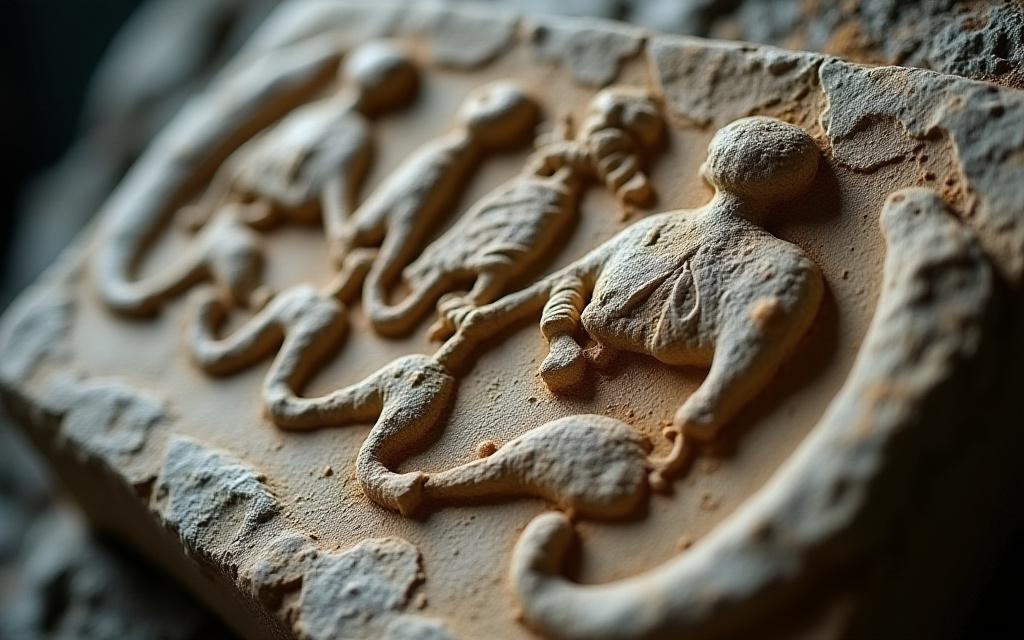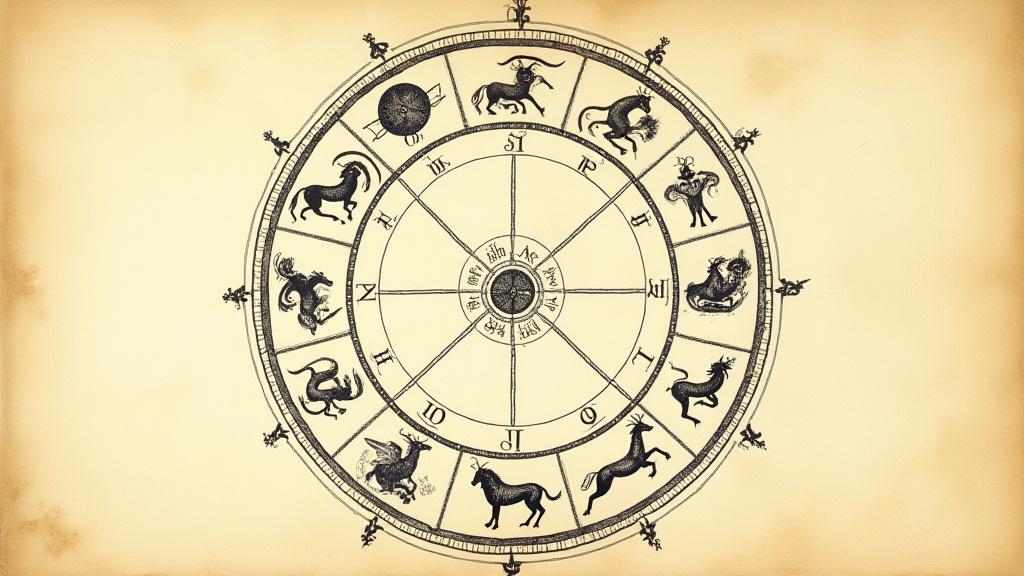
A depiction of the classical ecliptic through the lens of early Hellenistic scholarship.
The Psychology of Symbols
The term “zodiac” originates from the Greek zōiakos kyklos, or “circle of little animals.” In this scholarly exploration, we examine these figures not as predictive tools, but as robust cultural archetypes. Jungian psychology suggests that orbs in the sky served as a vast canvas for the projection of human experience. The Ram, the Bull, and the Twins were not chosen arbitrarily; they represented the seasonal rhythms of the Mediterranean world where these systems first solidified.
Why Animals?
Early agrarian societies relied on the recognition of patterns for survival. By associating specific groups of stars with recognizable terrestrial creatures, they created a mnemonic system for time-keeping. For instance, the Ram (Aries) coincided with the vernal equinox, a time of raw, creative emergence, mirroring the animal's assertive nature. This historical tethering highlights the grounded, practical roots of celestial observation.
“The stars are the writing of the ancients, etched in the ink of light upon the parchment of night.”
The Elemental Framework
The classification into Fire, Earth, Air, and Water was a development of Hellenistic natural philosophy. This system provided a framework to link physical characteristics with celestial influences.
Fire & Earth
Fire: Action and vitality (Aries, Leo, Sagittarius). Representing the kinetic energy of the sun.
Earth: Productivity and law (Taurus, Virgo, Capricorn). Representing the tangible stability of the harvest.
Air & Water
Air: Communication and intellect (Gemini, Libra, Aquarius). The ethereal connection between individuals.
Water: Emotion and intuition (Cancer, Scorpio, Pisces). Mirroring the depths of the unconscious sea.
Comparative Mythology: Greek vs. Roman
While often conflated, the Greek and Roman interpretations of archetypes carried distinct nuances. The Greek focus remained largely on the mythological narrative (such as the labors of Heracles or the tragedy of Orpheus), whereas Roman scholars like Ptolemy and later Renaissance thinkers refined these into more mathematical and philosophical constructs. This evolution moved the zodiac from a collection of stories to a refined system of cultural philosophy that underpins Western art and literature.